And thus, another calendar year (and decade!) has come and gone. 2019 brought many lows and highs in the world of film, bringing us stories untold as well as box-office records. This was the year of avenging, “eating the rich,” and the infamously popular #BongHive, among many other exciting phenomenons that threw the film community into a tizzy. Thus, I would like to open up and share my personal top ten favorites of a banner year in cinema. Thanks for reading!
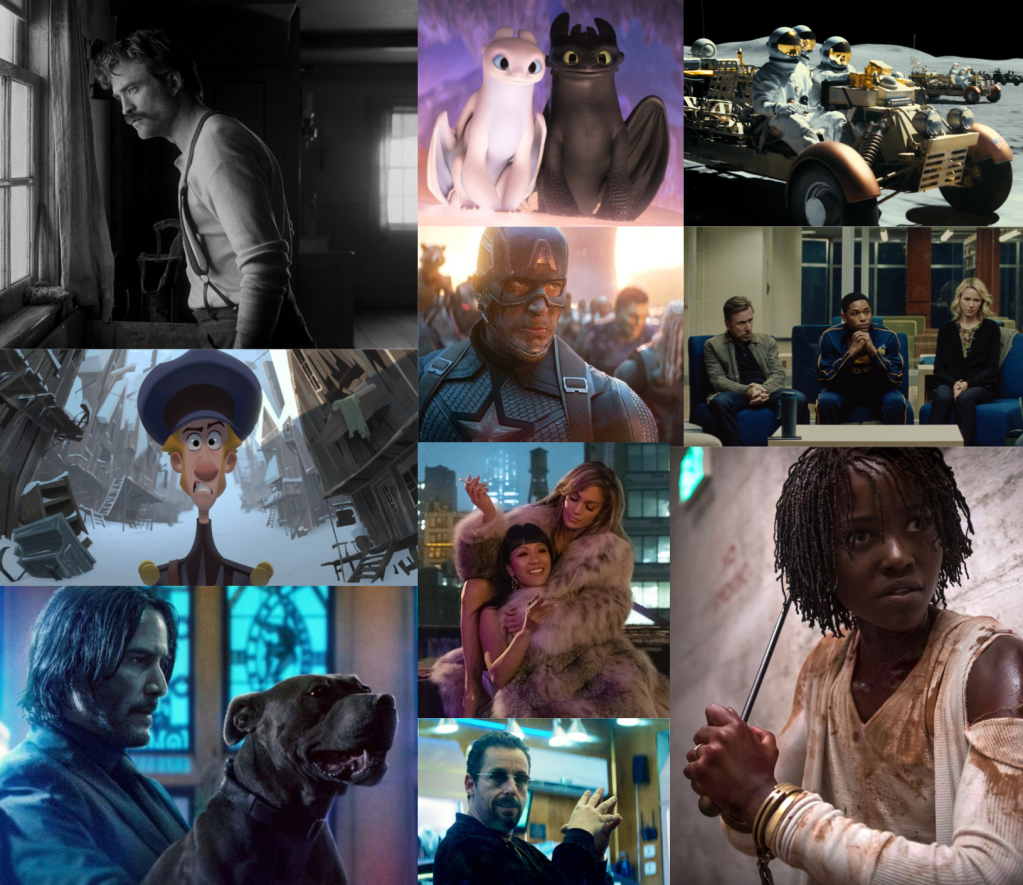
Honorable Mentions: Ad Astra, Avengers: Endgame, How to Train Your Dragon: The Hidden World, Hustlers, John Wick: Chapter 3 – Parabellum, Klaus, The Lighthouse, Luce, Uncut Gems, Us
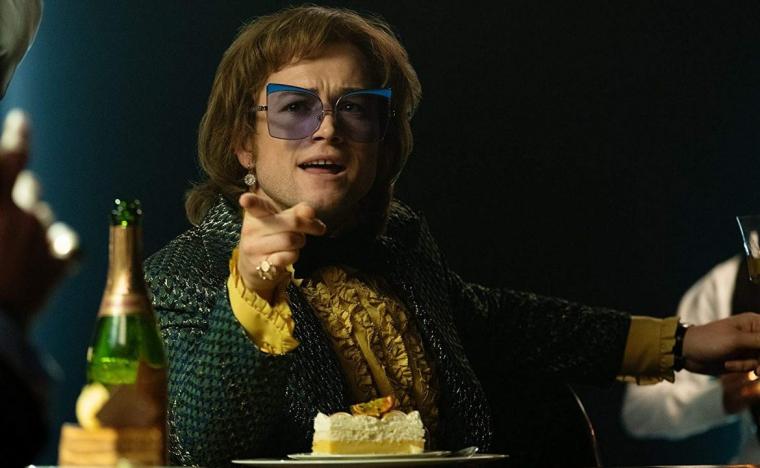
#10: Rocketman (Dir. Dexter Fletcher)
Biopics reached a new high this summer when Dexter Fletcher’s “Rocketman” was released. With the release of the divisive Oscar-winning “Bohemian Rhapsody” the previous year, many were frustrated that the musical biopic had reached new lows with lip-syncing, poor script, and routine storytelling. Fletcher’s decision to tell Elton John’s story with his music is one of the film’s biggest successes. Reminiscent of Broadway’s autobiographical musicals, Rocketman illustrates Elton John’s illustrious, colorful life and career with a killer tracklist of his repertoire, each song perfectly encapsulating where John is in the film. “Bennie and the Jets,” easily one of his most bonkers creations, serves as the background for a sequence highlighting Elton’s darkest vices. “Honky Cat” plays during a fantastic montage of his swanky lifestyle during his relationship with producer John Reid (Richard Madden). The costumes, choreography, and innovative storytelling elevates this film as one of the best biopics in recent years, but the real hero of the story is Taron Egerton. Singing and dancing his heart out, Egerton raises the bar for dedication to accurate portrayals in films, and it’s a shame the academy overlooked his stellar performance.
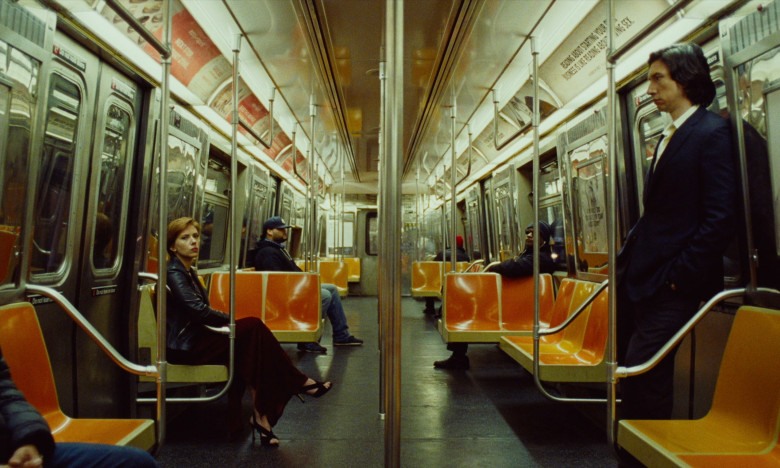
#9: Marriage Story (Dir. Noah Baumbach)
Do you ever start a film and predict you will be in tears by the story’s end? Noah Baumbach’s “Marriage Story” has that effect, dragging the audience into a modern divorce in a way most films can’t. Drawing from his infamous divorce with actress Jennifer Jason Leigh, Baumbach tells a sprawling, emotive story that covers gender norms, the monetary burden of lawyers, and the general need to “win” in an unhealthy relationship. This film has one of the most colorful ensemble casts in recent memory, with Ray Liotta, Merritt Never, and Wallace Shawn giving brief, electric performances. Laura Dern builds on her overdue narrative to give a sultry, engaging performance as a successful divorce lawyer. Rightfully so, the Lion’s share of the praise goes to Adam Driver and Scarlett Johansson, breaking our hearts with a dual-handed sensitive performance sure to resonate with anybody who’s ever wanted more, but still has a lot to lose.
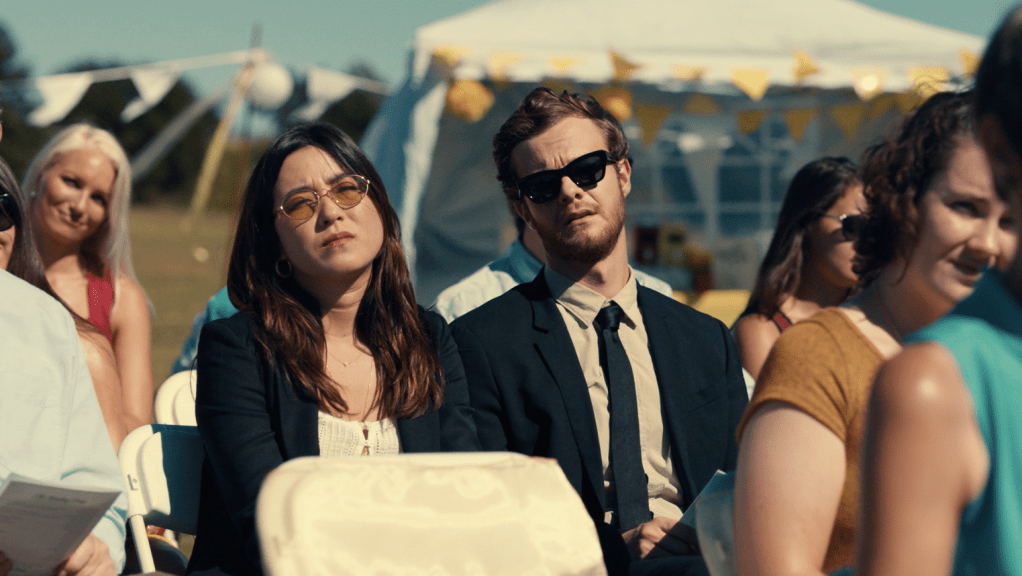
#8: Plus One (Dir. Jeff Chan & Andrew Rhymer)
If “Marriage Story” broke your heart by ending a marriage, “Plus One” will break it through starting a marriage (ten, to be exact). In the year’s most underrated film, college friends Alice (a hilarious Maya Erskine) and Ben (rom-com royalty Jack Quaid) agree to attend a summer of weddings together as each other’s plus one. Chan and Rhymer manage to lump the “wedding paranoia” that approaches with the end of your 20’s into the premise for an entire film. Their gut-busting script doesn’t just feel authentic, it is authentic. Watching the film, the audience knows that some of the film’s hilarious wedding mishaps are too good to be fabricated. This film would be absolutely nothing, however, if it weren’t for the two leads at its center. Maya Erskine and Jack Quaid have chemistry in spades, playing off each other like a game of comedic ping-pong. The two of them provide heart and humor, while Erskine in particular hits hard with her third-act monologue. Though you can probably predict where the film will go while watching, what will take you by surprise is how the filmmakers and actors manage to perfectly articulate why wedding fever creates such a panic for those in their late twenties. There comes a time where we’ll have to grow up again, and “Plus One” reminds us that we shouldn’t have to be alone when we do.
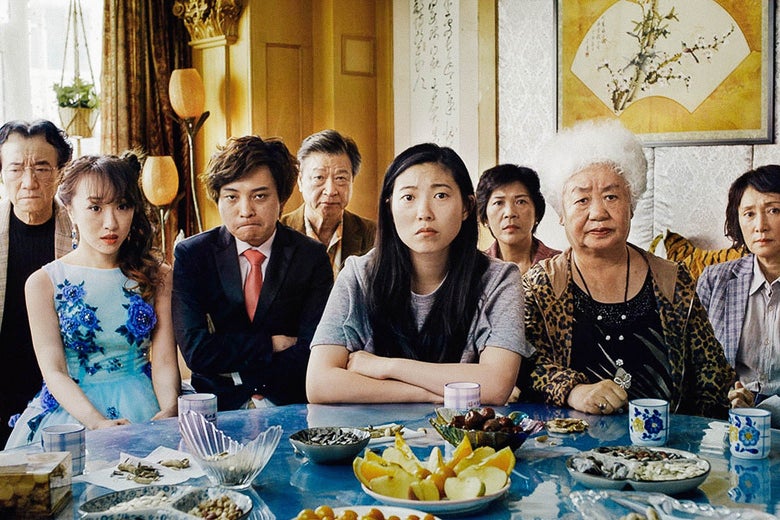
#7: The Farewell (Dir. Lulu Wang)
Grandma’s dying. It’s time to say goodbye. The one catch for Billi (Awkwafina) is that nobody in the family has decided to inform her Nai Nai that she is dying, so a wedding must be staged as a cover-up to get the entire family. together. Thus is the plot for “The Farewell,” insightfully written and directed by Lulu Wang, basing this film off of her own personal experiences with her family. Her story is keen to compare the cultural differences between America and China, and unafraid to put most of the movie in Mandarin. Wang harnesses the best in all of her actors, but really strikes with Awkwafina, who commands the screen in a career-defining dramatic turn. Coupled with a warm performance by Chinese legend Zhao Shuzhen, “The Farewell” is most certainly the movie that will reduce you to tears and make you call your grandma immediately after.
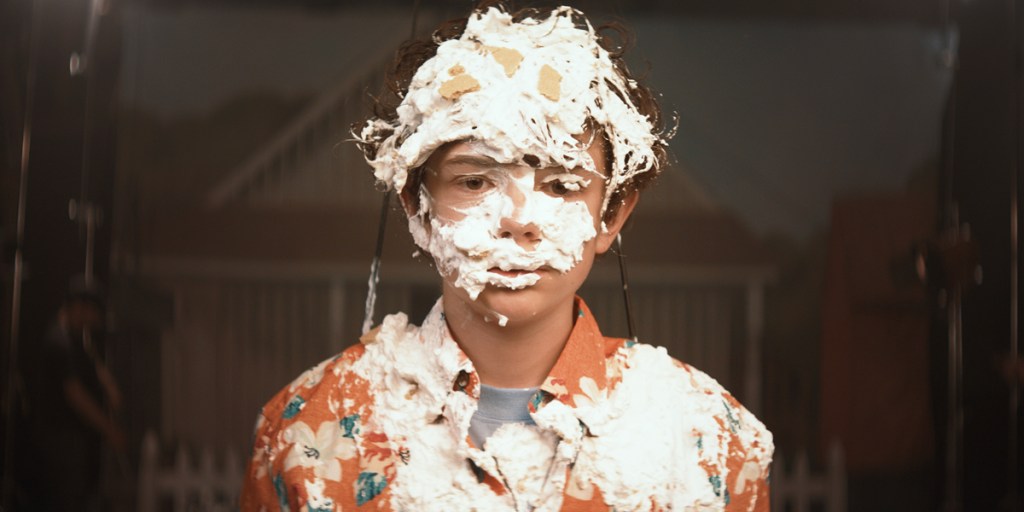
#6: Honey Boy (Dir. Alma Har’el)
Shia LaBeouf has been one of the most maligned celebrities of the past two decades. His name has become synonymous with the phrase “troubled celebrity.” However, with “Honey Boy,” he has come back in a big, BIG way. Drawing from his own relationship with his abusive father, LaBeouf’s script (initially assigned as a rehab assignment) is a melancholic catharsis for anyone who has struggled with addiction, abusive relationships, or most importantly, inherited trauma. This type of brutally open film would be a massive undertaking, so leave it to acclaimed documentarian Alma Har’el to create a stirring meditation on those who hurt us and how (or if) we choose to forgive them. Each note this film plays is fueled by raw emotion in the script and stellar performances from its main cast. LaBeouf shines playing a fictionalized version of his own father and Lucas Hedges commands the screen as a “Transformers” era LaBeouf. But in the end, it’s 14-year-old Noah Jupe who steals the show as Shia LaBeouf’s child-star counterpart, ripping the audience in half with a internal, yet emotionally-charged knockout performance.
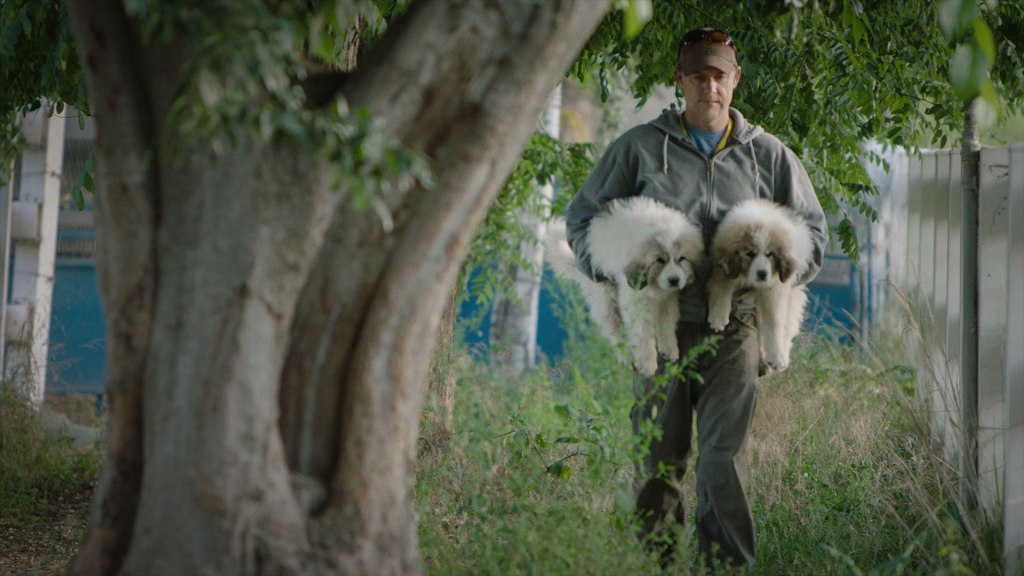
#5 The Biggest Little Farm (Dir. John Chester)
Did almost nobody see this film? Yeah. Should they have? OF COURSE! This incredibly intimate, positively uplifting documentary about John and Molly Chester’s agricultural conquest is beautifully shot and articulately narrated. The two of them are the proud owners of a 200 acre sustainable farm, which took them many years to cultivate and grow produce on. The cinematography, making ample use of HD slow-motion footage, is colorful and vibrant. Over the course of this film, I found myself caring more about the fate of the Chesters than most fictional characters this year. Their decision to document both the highs and lows of their experience encapsulates what might be the most ambitiously modern American Dream. With notable memorable animals in tow (Emma the pig! Greasy the Rooster! Todd the Dog!) “The Biggest Little Farm” serves as one of the most crowd-pleasing documentaries that can entertain and educate viewers of all ages.
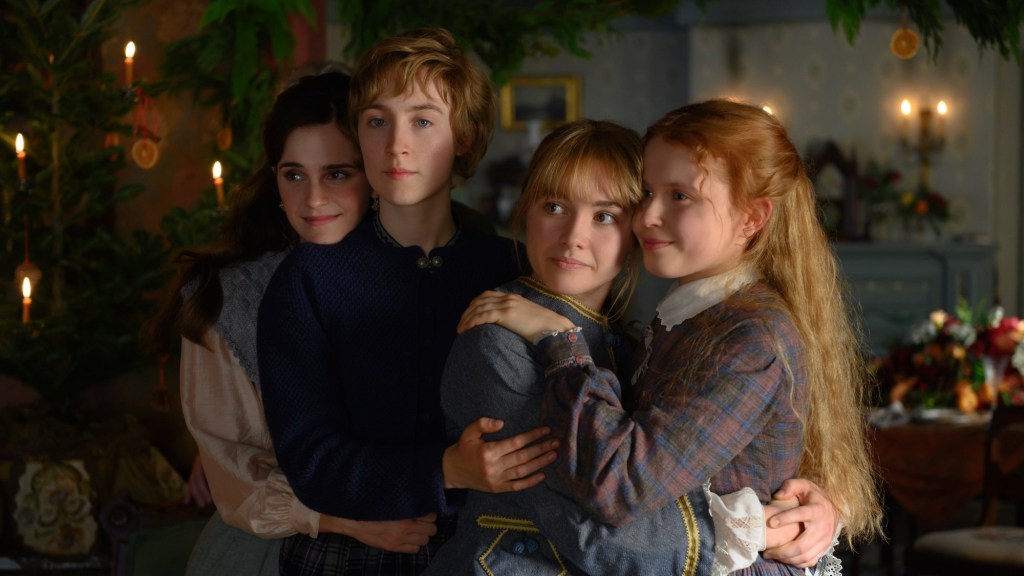
#4: Little Women (Dir. Greta Gerwig)
Leave it to Greta Gerwig to get a whole new generation excited about ANOTHER iteration of Louisa May Alcott’s classic novel. With her second solo feature, the writer/director marches in (pun intended) as a bold voice for modern cinema. Assembling a pitch perfect cast led by a top-notch Saoirse Ronan, Gerwig opens up the world of the March siblings in ways we haven’t seen, particularly giving more agency and story to Amy (Florence Pugh), notable for being one of the most divisive characters in classic literature. Her non-linear approach to the story may seem confusing upon first watch, but it allows audiences, especially those unfamiliar with the novel, to expect the unexpected. It also allows Beth (Eliza Scanlen) to live on after her heartbreakingly painful death. Above all else, it’s very important to acknowledge the legacy this story has, especially resonating with women. Jo and Amy both have perfectly scripted monologues that sum up the emotional and literal struggles that come with being a woman of that time period. But Gerwig’s writing, humorous and juicy and full of life, makes women of all ages feel seen, heard, and most importantly, understood. And that is why the legacy of “Little Women” will continue to thrive.
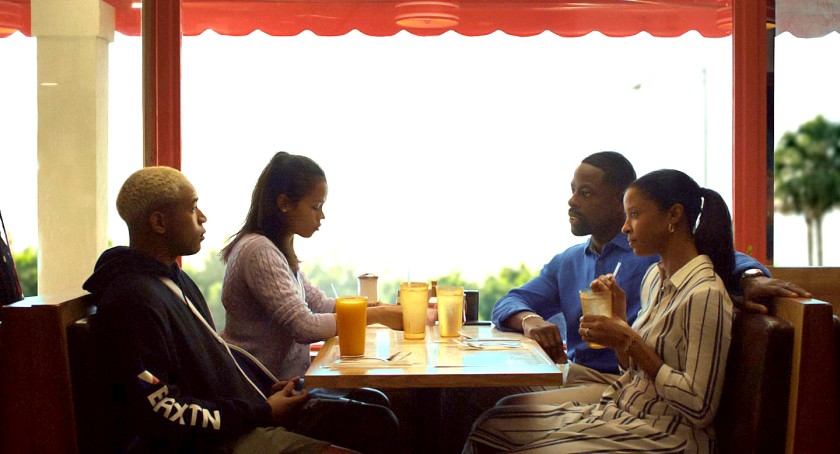
#3: Waves (Dir. Trey Edward Shults)
If the 2010s gave us a real director on the rise, that honor might have to go to Trey Edward Shults. With “Waves,” Shults has continued to climb higher, culminating in this dual narrative story that doesn’t leave a dry eye in the audience. To talk about the plot too much would delve into spoiler-laden territory, so I’ll say this is truly the best family-drama since 1980’s “Ordinary People.” As the family with said drama, each cast member plays their part to maximum effect. Kelvin Harrison Jr., just as excellent here as he is in “Luce,” gives a raw performance of subdued anger and suppressed emotion, giving causation to Tyler’s actions over the course of the film. Sterling K. Brown gives stoicism and order as the family’s domineering patriarch. Renee Elise Goldsberry, making the most of her limited screen time, is wholeheartedly genuine as a stepmother with a heart of gold. Alexa Demie and Lucas Hedges offer ample support as Tyler’s girlfriend and wrestling teammate, but in the end, Taylor Russell stands tallest of all. As Emily, Russell puts herself on the back burner for the first half of the film. Once she is brought to the spotlight, she delivers. Each glance, action, outburst, and observation of Emily’s is fully realized, as she must cope with moving on from a tragedy most people can never relate to. It’s a subtle, yet show-stopping performance that ranks among the year’s best and cements her as a force to be reckoned with. In addition to the performances, credit goes to DP Drew Daniels and colorist Damien van der Cruyssen for capturing the luscious, Floridian glow with sweeping wide shots and natural light. However, in the end, Shults deserves the praise for capturing an honest, authentic story of an African-American family through strong collaboration with his actors and crew. It’s an approach that should most definitely be modeled in future collaborations between actors and crew of different racial backgrounds.

#2: Parasite (Dir. Bong Joon-ho)
Do you hear that buzzing sound? It must be the #bonghive, the self-proclaimed collective fanbase of the director of “Parasite,” Bong Joon-ho. “Parasite” has taken the world by storm in a way that almost no other film has in recent memory, let alone a foreign film. Is it a satire? A comedy? A drama? An allegory? Maybe one of those things! Maybe more! The South Korean phenomenon finds the dirt-poor Kim family weaseling their way into working for the filthy rich, dim-witted Park family. How they get there is an adventure to be witnessed, but the film evolves into something completely different along the way, to the collective shock of all audiences. This film truly hinges on the unexpected, keeping the audience on its toes for the entire film, and sticking with them long after they’ve left the theatre. It truly proves that masterful cinema can come from anywhere, anyone, and anything, regardless of race. As someone with two South Korean siblings, it makes me ecstatic that this film and “The Farewell” have brought Asian representation to the forefront of this year’s top cinema, and here’s hoping they continue to lead us through the 2020s and beyond.
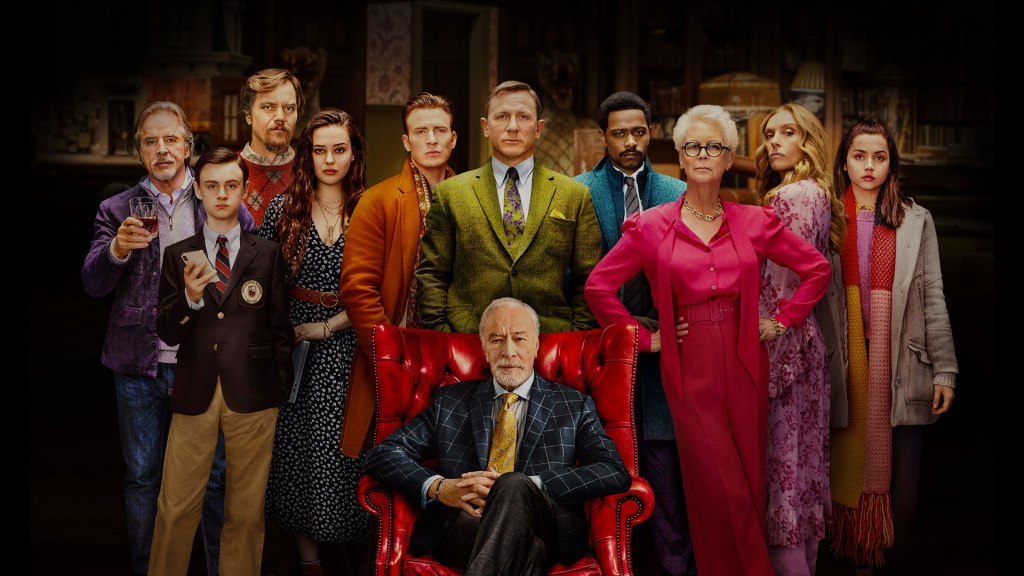
#1: Knives Out (Dir. Rian Johnson)
Y’all remember the last time you had a BLAST at the movies? I do, and it all started the second I sat down for this movie. Rian Johnson, chief of genre-bending and original storytelling, gave two middle fingers to “The Rise of Skywalker” by creating his own timely, hysterical, Agatha Christie-inspired whodunnit worthy of every single award. Featuring a whip-smart cast and juicy script, “Knives Out” finds renowned investigator Benoit Blanc (Daniel Craig) investigating the death of popular novelist Harlan Thrombey (Christopher Plummer), with the help of Harlan’s devoted caretaker, Marta (Ana de Armas). The ensemble of sleazy-rich Thrombey’s, including Jamie Lee Curtis, Don Johnson, Toni Collette (doing her best Gwyneth Paltrow impression), Michael Shannon, Katherine Langford, Jaeden Martell, and a scene-stealing Chris Evans, each excuse their one liners perfectly, playing into a family who have built their lives off the back of one individual. But what’s most impressive is how Johnson’s insightful, calculated direction and writing makes this film stand out from other whodunnits in film history. By infusing the film with visual cues, beautiful sets, and stunning cinematography, Johnson keeps the audience exactly where he wants them until he pulls the final rug out from under them. The script is chock-full of hilarious one liners, hilarious cuts to comedic moments (Daniel Craig singing “Losing my Mind” from “Follies”? GENIUS) and above all else, a captivating story that steps on the gas, but isn’t afraid to slow down when necessary. I’m unafraid to add this film to my best of the decade list, and cannot wait to continue to watch this masterpiece again and again.
This wraps up my top ten of the year! Thanks to anybody who’s reading out there! 🙂
 Reel Talk